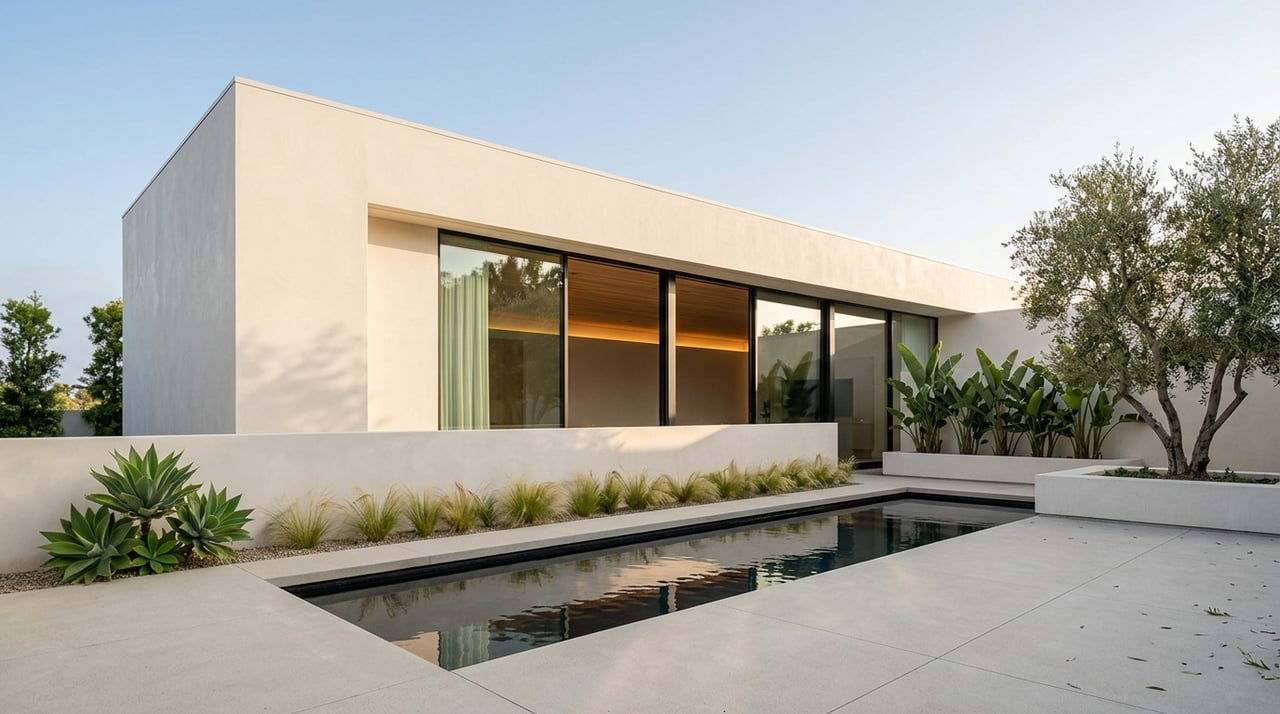
If you look at Bel Air as one luxury market, you can miss what actually drives price. A gated cul-de-sac home, an East Gate estate, and a high-elevation view property may all sit under the Bel Air name, but they do not compete the same way. If you are buying, selling, or simply trying to understand value in this market, it helps to know where premiums come from and where they do not. Let’s dive in.
Bel Air Is a Layered Market
Bel Air is best understood as a group of overlapping micro-markets, not one uniform price point. The City of Los Angeles places Bel Air within the Bel Air-Beverly Crest Community Plan area, a roughly 9,900-acre area that is predominantly single-family, while the Bel-Air Association describes the neighborhood as having more than 2,000 properties.
That matters because value in Bel Air is highly local. A home’s position within the neighborhood, its access pattern, lot shape, elevation, and privacy profile can all change how buyers respond. In practice, two homes with similar square footage may attract very different pricing if one offers a stronger setting or more controlled access.
The original Bel Air Estates subdivision, laid out in 1922, still shapes the area today. Winding hillside streets, irregular lot sizes, mature landscaping, privacy walls, and large estate parcels remain part of the neighborhood’s physical character. Many original homes have also been replaced by newer construction, which means value often comes from both the location itself and the future potential of the parcel.
Why Gates Matter in Bel Air
A gate can add value, but not in a simple or automatic way. In luxury markets, buyers often pay more for a bundle of benefits that can include privacy, controlled access, maintenance standards, and a stronger sense of separation from surrounding traffic.
In Bel Air, that bundle is easy to see. Guard-gated enclaves such as Bel Air Crest are often marketed around 24-hour guard-gated access, private cul-de-sacs, community amenities, and privacy. Some listings also note significant HOA dues, which is an important reminder that a gate is not just a feature. It is part of an operating structure that can support value, but also carries ongoing costs.
Bel Air also has a long gate identity. City Planning records identify the East Gate and West Gate as original entrance features dating to 1924. That history gives gates in Bel Air both practical and symbolic importance. They do not just manage access. They also reinforce the neighborhood’s long-standing identity around privacy and prestige.
What Buyers Are Really Paying For
When a gated setting commands a premium, buyers are usually responding to a few core factors:
- Reduced through-traffic
- Greater privacy
- More controlled entry points
- Ongoing neighborhood stewardship
- A more consistent ownership environment
The Bel-Air Association adds another layer to this value story. Its stated mission includes protecting homeownership enjoyment and property values, along with improving safety and security, and it says security cameras are being installed at neighborhood entrances and high-traffic ingress and egress points. In Bel Air, perceived control and active stewardship are part of the market narrative.
Why Views Carry a Scarcity Premium
Views matter in many luxury neighborhoods, but in Bel Air they are closely tied to topography. Hillside location, slope, driveway access, grading needs, and geotechnical constraints all influence what can be built, how easily a site can be improved, and whether a view is truly durable.
The City of Los Angeles’ hillside guidance makes clear that hillside development can involve detailed review, especially on steeper sites. That means a dramatic view is not just an aesthetic bonus. It may reflect land that is difficult to replicate, expensive to modify, or limited by terrain.
This is one reason high-quality views tend to command stronger premiums than average outlooks. The strongest value usually comes from views that are broad, unobstructed, and hard to replace. A partial view from one room, or a view that may be vulnerable to future obstruction, is often less persuasive in pricing.
Not All Views Are Equal
In Bel Air, the market tends to reward view quality, not just the word “view” in a listing description. These distinctions can make a real difference:
- Head-on city or city-to-ocean views often attract the strongest attention
- Wide panoramic views typically carry more weight than narrow sight lines
- Protected or hard-to-replicate views are more defensible than easily obstructed views
- Views paired with privacy and usable outdoor space tend to be the most valuable combination
Recent listing and sale examples in Bel Air reflect this pattern. Homes marketed with unobstructed city-to-ocean views, gated drives, private motor courts, or private cul-de-sac settings show how the market often prices privacy and view quality together rather than separately.
Where the Biggest Premiums Show Up
The highest values in Bel Air often appear when several advantages line up at once. A gate alone can help. A view alone can help. But the most resilient pricing usually comes from the intersection of access, privacy, lot usability, and view permanence.
For example, a home with controlled access, a usable lot, broad views, and a private approach may command a much stronger response than a larger home without those qualities. That is because buyers at the top of the market are often evaluating the full experience of the property, not just interior square footage.
This is especially true in hillside settings. A parcel that feels easy to live in, with practical arrival, functional outdoor areas, and a strong relationship to the view, can stand apart from a property that looks impressive on paper but feels compromised in use.
Pricing Depends on the Right Competitive Set
Bel Air market numbers can look inconsistent at first glance, but they are often measuring different slices of the market. For the three months ending April 2026, Redfin reported a Bel Air median sale price around $3.2 million and average days on market near 95. Realtor.com reported 153 homes for sale, a median listing price of $6.50 million, a median days on market figure of 61, and a 93 percent sale-to-list ratio in March 2026. Sotheby’s Q1 2026 Bel-Air snapshot showed a median sales price of $3.3 million, average days on market of 45, 18 closed sales, and 96 inventory.
These figures are useful, but they do not describe one perfectly uniform market. They show that Bel Air behaves like a segmented luxury environment, where price, pace, and buyer demand can vary depending on property type and location within the neighborhood.
Why Some Homes Take Longer to Sell
One-of-a-kind gated view estates often have a narrower buyer pool than more standard luxury homes. That can mean a longer marketing window, even in a highly recognized address.
Bel Air Crest examples help illustrate the point. One listing had been on market for 281 days, while another guard-gated home had been on market for 116 days. Those examples do not prove a rule for every property, but they do show that uniqueness alone does not guarantee speed.
In the current environment, broader Bel Air-Beverly Crest data points to a balanced or buyer-leaning luxury market rather than an overheated seller’s market. Sale-to-list ratios below 100 percent and days on market measured in the dozens suggest that pricing discipline still matters. A strong gate or view can support value, but it does not erase the impact of overpricing, condition issues, or a mismatch with buyer expectations.
How Sellers Should Think About Comparables
In Bel Air, the best comparable sales are not always the nearest sales or the largest homes. The most useful comparisons usually share the same access pattern, lot utility, view type, and renovation level.
That means a home past the East Gate with strong city views should not be priced only against a flatter interior-lot estate. A guard-gated Bel Air Crest property on a private cul-de-sac should also not be measured on square footage alone if its privacy, amenities, or outlook differ in meaningful ways.
When sellers use the wrong competitive set, pricing can drift away from how buyers actually evaluate the home. In a nuanced market like Bel Air, precision matters more than broad averages.
What This Means if You Are Buying or Selling
If you are buying in Bel Air, it helps to ask what part of the premium you are really paying for. Is the value in the gate itself, or in the combination of privacy, managed access, and neighborhood upkeep? Is the view broad and durable, or attractive but limited? The answers affect both present value and future resale appeal.
If you are selling, the goal is to position the home within the right submarket and tell a clear value story. Buyers need to understand not only what the property is, but why it is hard to replicate. In Bel Air, that usually comes down to a specific mix of access, privacy, topography, usability, and view quality.
In a market this layered, careful analysis matters. The homes that perform best are usually the ones priced and presented with a deep understanding of what buyers are truly comparing.
If you are considering a sale or want a more precise read on how your Bel Air property fits into today’s market, the Jacqueline Chernov Team offers discreet, data-informed guidance tailored to high-value Westside homes.
FAQs
How does a gate affect Bel Air home value?
- A gate can add value when it improves privacy, reduces through-traffic, and is part of a well-managed access and maintenance environment.
How do views influence Bel Air pricing?
- Views usually carry the strongest premium when they are broad, unobstructed, and difficult to replicate due to the site’s topography and setting.
How should sellers choose comparable sales in Bel Air?
- Sellers should compare homes with similar access, lot usability, view type, and renovation level rather than relying only on size or nearby sales.
Why do some Bel Air homes stay on the market longer?
- Unique gated or view properties often have a narrower buyer pool, and overpricing or condition issues can also extend time on market.
Is Bel Air one consistent luxury market?
- No. Bel Air functions as a set of overlapping micro-markets, so pricing and demand can vary significantly by location, access pattern, and property type.