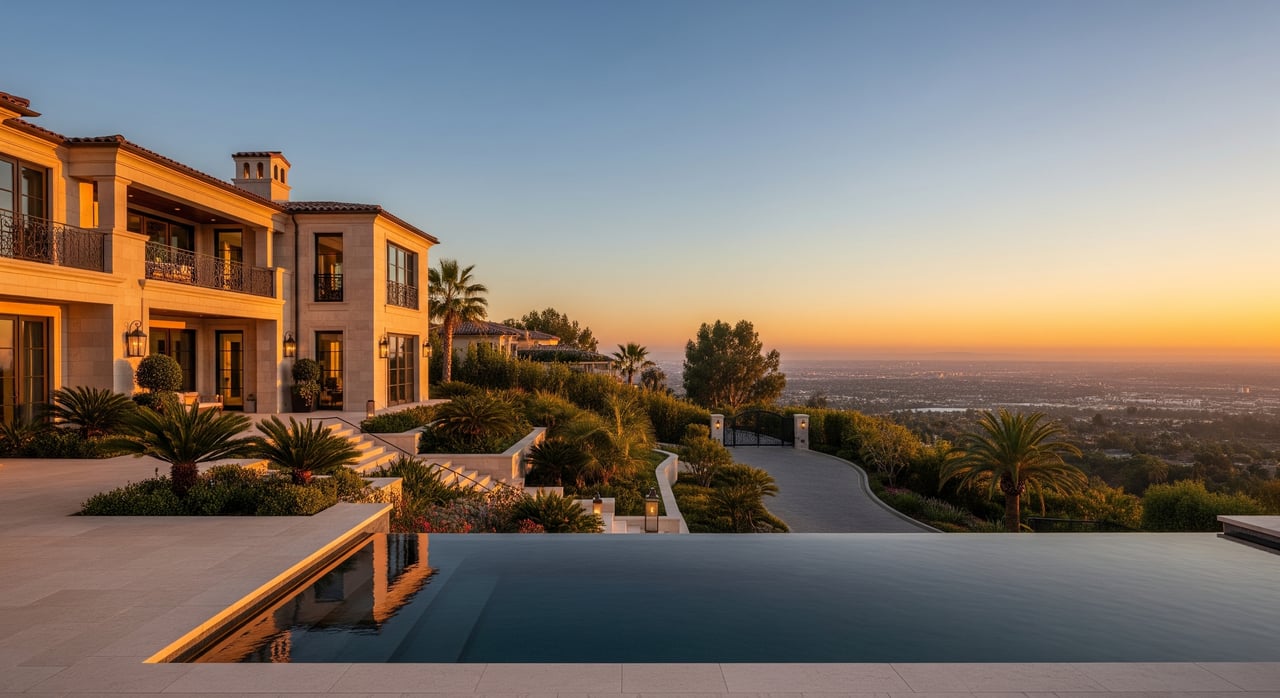
In Bel Air, getting the price right is the single biggest lever you control. The buyer pool is selective, comps are scarce, and each property is unique. You want to protect your privacy, move on your timeline, and still maximize your net. In this guide, you will learn how to price with confidence using micro-comps, how to quantify premiums for views, land, and architecture, and how to manage Days on Market so your listing stays strong. Let’s dive in.
Why Bel Air pricing is different
Bel Air sits at the ultra-luxury tier, where every property is one of one. Sales are fewer, and off-market deals are common, which can make traditional metrics noisy. In this environment, median prices or citywide price per square foot can mislead. You need a micro-lens that focuses on your exact street, topography, view corridor, and provenance.
Buyers are often high-net-worth and pay cash or use low leverage. They prioritize privacy, security, and architectural pedigree. Because the pool is small and discerning, a credible, well-supported price usually outperforms an inflated ask that chases the market.
Pinpoint your value drivers
A clear pricing story starts with the features that actually move the number in Bel Air. Focus on the following.
Views that command a premium
Not all views are equal. Panoramic or protected city lights and ocean panoramas tend to carry higher premiums than partial or seasonal views. Consider exclusivity, how much of the horizon you command, and whether future development could block sightlines. The permanence of a view affects value.
Lot size and usable land
Total acreage matters less than usable, flat land. Buyers pay for the buildable plateau, not steep slopes that are inaccessible. A private, usable yard that supports lifestyle spaces such as pool, guest house, or courts often yields a meaningful premium. On hillsides, evaluate price per usable acre or per buildable square foot.
Architectural pedigree and provenance
Design pedigree can be a major value driver, especially when the home is an authentic, well-preserved example. Historical significance or notable ownership can add appeal. Condition and market taste are key. Restored, documented properties usually command more than altered versions.
Privacy, security, and access
Gated drives, discreet entries, staff areas, and thoughtful site planning matter to this buyer set. Ease of access to main corridors without sacrificing privacy is a strong differentiator.
Condition and finish level
Turnkey, expertly finished estates reduce buyer friction. Smart-home systems, updated mechanicals, and curated outdoor living can help support a higher price. Deferred maintenance pulls the number down and needs to be quantified.
Build a micro-comp set
You will learn more from five razor-sharp micro-comps than from fifty broad ones. Here is how to build the right set.
- Narrow the map to your street or adjacent blocks, and stop when terrain or orientation changes.
- Match the product type, including bedroom count, guest house, pool and spa, garage capacity, and finish quality.
- Weigh closed sales with verified data most heavily. Treat reported off-market sales as directional unless you can validate details.
- Stretch the time window to 12 to 36 months if volume is low, and weight the most recent sales more.
- Adjust for material differences. Do not rely on a citywide price per square foot for an ultra-luxury hillside estate.
Quantify premiums the right way
Use simple, defensible methods, then document your logic for buyers and brokers.
Paired-sale analysis
Find two nearby sales that are nearly identical except for one feature. If one has a protected city-to-ocean panorama and the other does not, the price gap helps isolate the view premium. This is intuitive for buyers and is often the most persuasive approach.
Percent adjustments from your comp set
When perfect pairs do not exist, estimate a percentage adjustment across several comps for a feature such as usable land or a guest house. Apply the range to your subject and explain the basis. Be candid that the market applies ranges, not absolutes.
Data tools and modeling
Advanced analytics can help estimate marginal values for features like lot acreage or architecture using larger datasets. These tools support your story, but the final valuation should still align with verified local evidence and your micro-comps.
Set a list price that works
Aspirational pricing can feel tempting, but in Bel Air the best outcomes usually come from a realistic price that is supported by data. The right ask signals credibility and draws serious buyers early.
- Anchor your price in micro-comps, then layer premiums for views, usable land, architecture, privacy, and condition.
- Price at or only slightly above expected market value, and allow for normal negotiation. Large buffers often create longer Days on Market and skepticism.
- Prepare a broker packet that supports your number, including comps, construction or restoration documents, inspection summaries, and any permits or approvals. Reduce friction and answer questions upfront.
Manage Days on Market optics
Extended Days on Market can signal mispricing, complexity, or perceived issues. In the ultra-luxury tier, buyers notice the timeline.
Launch strategy and pre-market momentum
Stage the home to convey scale and lifestyle, and invest in premium visuals. Use targeted broker outreach and private showings to vetted buyers before going fully public. A calibrated launch creates urgency and protects the narrative.
Price movements that maintain credibility
Avoid frequent or large reductions. If a reduction becomes necessary, tie it to a clear rationale such as new comparable sales, market feedback, or updated carry-cost analysis. Communicate the story to the broker community so buyers understand the change.
Public versus private marketing
Off-market or office-exclusive strategies can protect privacy and avoid public DOM. This can be a fit when discretion is the priority. The trade-off is reduced exposure and less competition, which can affect price discovery. Choose the path that aligns with your goals.
Decide to list now or wait
Timing can be as important as price. Use a structured approach so you can decide with confidence.
Factors to weigh
- Objectives and constraints, including privacy, timing, net proceeds, and any tax or estate deadlines.
- Market liquidity and inventory in your micro-segment. Unique, well-positioned properties can outperform even in slower cycles.
- Macro conditions, such as interest rates, currency moves, and broader sentiment toward luxury assets. Ultra-luxury buyers are often less rate sensitive, but macro tone still matters.
- Property readiness. If targeted improvements will likely produce more uplift than carry costs, strategic waiting can make sense.
Financial trade-offs
Calculate monthly carry costs for taxes, insurance, maintenance, security, and staffing. Compare this to the expected uplift from renovations or a better market window. If liquidity needs are immediate, the holding period may not be practical.
A simple decision framework
- Step 1: Secure a professional valuation anchored in micro-comps, with clear adjustments for view, land, and architecture.
- Step 2: Run a sensitivity analysis that models list price versus time to sale, including best, likely, and conservative outcomes.
- Step 3: Confirm readiness, including disclosures, permits, staging or light improvements, and premium marketing assets.
- Step 4: Consider private pathways if privacy is paramount, and document the trade-offs.
- Step 5: Set trigger points for strategy shifts, for example a six-week checkpoint to evaluate traction and feedback.
A practical pricing checklist for Bel Air sellers
- Identify the three strongest micro-comps and show how each aligns or differs.
- Quantify your top premiums, such as protected views and usable land, with paired-sale support when possible.
- Prepare a complete disclosure and document packet for buyer confidence.
- Stage for scale and flow, and invest in world-class visuals including twilight and aerials.
- Plan a targeted broker campaign before full public launch.
- Define your pricing guardrails, including your minimum acceptable net proceeds.
What we do for Bel Air sellers
You deserve a discreet, data-driven process that protects value. Our boutique team brings developer-grade preparation and premium marketing to every ultra-luxury listing.
- Valuation built on micro-comps, with clear premiums for views, usable land, and architectural pedigree.
- Concierge preparation, including staging guidance, vendor coordination, and document readiness that reduces friction.
- Premium marketing assets and targeted broker outreach that create early momentum.
- Calibrated launch strategy and active feedback loops, with defined trigger points for pivots.
- Strategic counsel on public versus private pathways, aligned to your privacy and pricing goals.
If you are considering a sale, we can map your pricing story, launch plan, and timeline so you move forward with clarity.
Ready to talk strategy for your Bel Air estate? Connect with the Jacqueline Chernov Team for a confidential consultation tailored to your goals.
FAQs
How do I price a Bel Air home with a rare view?
- Start with two to three micro-comps on nearby blocks, then use paired-sale analysis to isolate the view premium, and confirm the permanence of the sightline.
Should I price high and test the market in Bel Air?
- In the ultra-luxury tier, a credible, data-backed price close to expected market value typically attracts qualified buyers faster and avoids Days on Market stigma.
Is off-market the best way to protect privacy when selling?
- Private marketing can limit public exposure and DOM, but it also narrows competition, so use it when privacy outweighs the need for broad price discovery.
How much does architectural pedigree add to price?
- It depends on condition, authenticity, and buyer taste, so use local comps of similar architects or documented properties, and support the story with restoration details.
How long do Bel Air luxury homes take to sell?
- Timelines vary widely due to property uniqueness and buyer pool size, so focus on micro-comps, readiness, and a disciplined launch to shorten Days on Market.