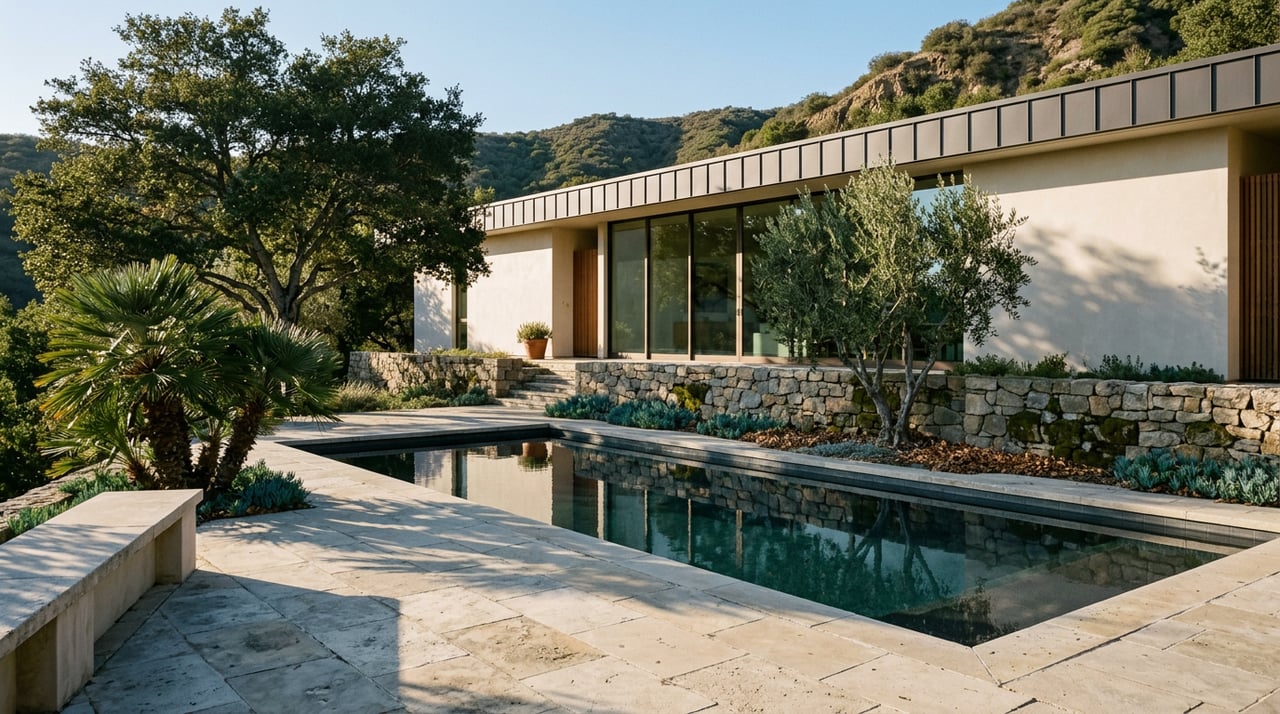
A seller listing a $12 million home in Beverly Hills and a seller listing an identical $12 million home a few streets north, both with a "Beverly Hills, CA 90210" address, are not playing by the same rules. One sale will carry roughly $13,200 in transfer taxes at closing. The other will carry closer to $727,000. Same zip code. Same price. A difference of more than $700,000, and it has nothing to do with the house.
The line that separates them isn't a school district boundary or a homeowners association rule. It's the actual, legal edge of the City of Beverly Hills, a border that the postal service never bothered to draw a zip code around.
The Tax the Envelope Doesn't Warn You About
Beverly Hills is an independently incorporated city. It sets its own building code, runs its own police and fire departments, and, critically, sits entirely outside the reach of the City of Los Angeles' Measure ULA transfer tax. The area known as Beverly Hills Post Office, or BHPO, is not so lucky. Despite carrying the same 90210 zip code and the same "Beverly Hills" mailing address, Wikipedia identifies BHPO as part of the City of Los Angeles. That means every qualifying sale inside it is subject to the tax Angelenos have come to call the mansion tax.
According to the Los Angeles Office of Finance, transactions closing after June 30, 2026 face a 4% tax on the full sale price between $5.4 million and $10.9 million, and a 5.5% tax on anything at or above $10.9 million. The tax is calculated on the gross sale price, not on profit, and there is no exemption for a seller who has owned the home for decades.
Hanson Bridgett reports that the Los Angeles County documentary transfer tax is 0.11% and the Los Angeles City tax is 0.45%. Here's what that looks like on a $12 million sale, using the same price twice:
| Cost at closing | Beverly Hills (city) | BHPO (Los Angeles) |
|---|---|---|
| LA County transfer tax (0.11%) | $13,200 | $13,200 |
| LA City transfer tax (0.45%) | Not applicable | $54,000 |
| Measure ULA (5.5% at or above $10.9M) | Not applicable | $660,000 |
| Total | $13,200 | $727,200 |
The Los Angeles County Registrar-Recorder/County Clerk states that the county's documentary transfer tax applies throughout Los Angeles County at 0.11%, regardless of city. The other two line items only apply inside Los Angeles city limits, which is exactly where the entire BHPO area sits. Beverly Hills proper never sees either of them, no matter how high the sale price climbs. These figures reflect only transfer taxes at current published rates and don't include commissions, escrow fees, or other closing costs, so anyone modeling a specific sale should confirm final numbers with their escrow officer.
Why One 90210 Address Isn't Like the Other
The split traces back to 1914, when Beverly Hills incorporated with a northern border roughly a mile above Sunset Boulevard. The hillside land stretching further north, up toward Mulholland Drive, stayed part of Los Angeles. For decades it was rural and largely anonymous. In the 1920s the federal government routed its mail through the Beverly Hills post office, and by 1963 the area was folded into the newly created 90210 zip code alongside the northern part of the actual city. The mail got a Beverly Hills return address. The land never changed hands.
Today that area covers hillside neighborhoods including Benedict Canyon, Coldwater Canyon, and Beverly Crest, along with some of the most private gated enclaves on the Westside: North and South Beverly Park, The Summit, and Mulholland Estates among them. The homes are frequently larger, the lots often more expansive, and the views can rival anything inside the city line. What they don't share with their neighbors to the south is a city government.
The Divide Doesn't Stop at Taxes
A property's actual jurisdiction touches far more than what's owed at closing. Homes inside BHPO are served by the Los Angeles Police and Fire Departments and fall under the Los Angeles Unified School District rather than Beverly Hills Unified. None of that shows up on a listing sheet, and none of it is implied by the zip code.
For anyone building or substantially remodeling, the divide matters just as much. Beverly Hills maintains its own hillside development standards under its municipal code, including landform alteration rules and view preservation requirements that apply specifically to construction within city limits. A project one street over in BHPO answers instead to the Los Angeles Department of Building and Safety and the Los Angeles Department of City Planning, an entirely separate review path with its own timeline and its own standards. Two lots that look similar on paper can move through very different approval processes depending on which side of the line they sit on, a distinction that matters most to anyone evaluating a teardown, a spec build, or a major addition before they've committed to the site.
What This Means When You're Reading a Comp
Public tracking of Beverly Hills home sales showed a median sale price around $4.7 million over the second quarter of 2026, up sharply from the same period a year earlier. That figure is useful context, but it's also a blend. It typically aggregates everything filed under the Beverly Hills market, and depending on how comps are pulled, that can mix true City of Beverly Hills transactions with BHPO sales that share the mailing address but not the underlying tax profile, the permitting path, or the municipal services.
That distinction changes how a comp set should be read. Two recent sales at similar price points might look like direct comparables on a portal search, yet one sale carried a five or six-figure transfer tax the other never faced, and one closing timeline may have included a Beverly Hills hillside design review the other skipped entirely. Pricing a listing, or evaluating an offer, off a blended 90210 comp set without separating those variables risks building a strategy on numbers that were never really measuring the same market.
Before You Write an Offer or List Your Home
A few steps confirm which set of rules actually applies to a given parcel:
- Verify the property's legal jurisdiction through the Los Angeles County Assessor's parcel record rather than relying on the mailing address.
- Ask your escrow or title company which transfer taxes will apply to the specific sale price before setting a list price or countering an offer.
- Confirm which police department, fire department, and school district actually serve the address.
- For any addition, remodel, or ground-up build, confirm whether Beverly Hills' Building and Safety Division or the Los Angeles Department of Building and Safety has jurisdiction, since the review standards and timelines differ.
A Few Questions Worth Asking First
Does a 90210 zip code guarantee my home is inside the City of Beverly Hills? No. Zip codes are assigned for mail routing and carry no legal relationship to city boundaries. The county assessor's parcel record shows the actual jurisdiction.
Does the Beverly Hills exemption ever phase out as the price climbs? No. The exemption is tied to the property sitting outside Los Angeles city limits, not to price. A $50 million sale inside Beverly Hills proper owes no Measure ULA tax, while a comparable sale a few blocks away inside Los Angeles city limits is taxed at 5.5% of the full price.
For sellers weighing where and when to list, or buyers comparing two homes that look identical on a portal, the jurisdiction behind the address is often the number that matters most. The Jacqueline Chernov Team works these boundaries daily across Beverly Hills, the Post Office enclaves, and the surrounding Westside, and can walk you through exactly what a specific parcel owes, and to whom, before you price a listing or make an offer. Request a Confidential Market Consultation to get the full picture before you sign anything.
This article is general information, not legal, tax or financial advice. Consult a qualified professional about your situation.